Publication date: 20/10/2026
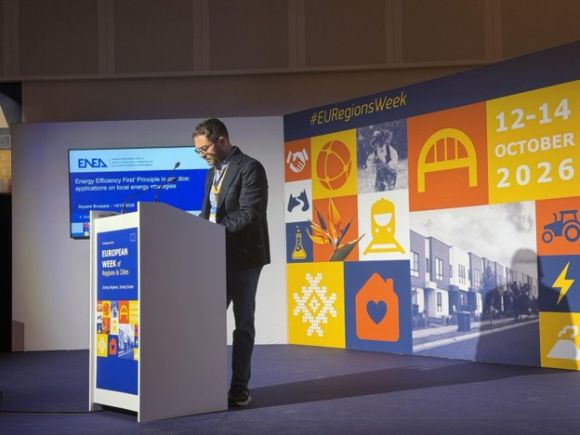
Up to 987 people could be lifted out of energy poverty by 2030 through two measures assessed in Italy’s Friuli Venezia Giulia region. Presented at the European Week of Regions and Cities in Brussels on 14 October, the projection put a concrete social outcome alongside the usual calculations of energy savings and investment costs.
Salvatore Tamburrino, a researcher at Italy’s national agency ENEA, presented work from the EU-funded SEED MICAT and ENEFIRST+ projects. Both support the “Energy Efficiency First” principle, which asks decision-makers to prioritise cost-effective reductions in energy demand when planning energy investments. A municipality choosing a new heating system, for example, should consider how renovating the building could reduce the amount of heat it needs.
The Friuli Venezia Giulia case assessed €86.2 million in investments in residential building improvements, including insulation, roofs and windows, alongside €6 million for replacing boilers with heat pumps in public buildings such as schools and sports facilities. The analysis projected an increase of approximately €12.5 million in regional GDP by 2030. Building renovations produced the strongest overall impact in the assessment, with benefits including reduced energy poverty.
The assessment used MICATool to calculate the wider effects of energy measures. It takes energy savings as a starting point and can incorporate investment costs, energy prices and other parameters. This allows planners to put monetary values on effects that conventional calculations may overlook, including health benefits and changes in employment. The figures remain projections, and the tool supports assessment without replacing detailed modelling.
A second case, covering the Metropolitan City of Milan, looked at building renovations and heating systems in an area with an ageing building stock and heavy reliance on natural gas. Better insulation reduces the amount of heat a building needs, while heat pumps change how that heat is supplied. Comparing these measures requires attention to the different ways they affect energy use.
In Naples, the focus shifted from calculating benefits to how decisions are made. Under ENEFIRST+, researchers examined the city’s 2012 Sustainable Energy Action Plan and its 2017 monitoring update. Their assessment covered energy, regulation, finance and social considerations, as well as the knowledge and capacity needed to put measures into practice. It aimed to identify gaps and inform future planning.
“Good implementation starts with good data and organisation,” one slide read. The presentation stressed that energy efficiency should run through the whole planning process, from choosing measures to checking their results. Because climate and energy plans under the Covenant of Mayors are voluntary, their value also depends on municipalities having the capacity to carry them out and monitor progress.
An audience member asked how the work would continue after the projects end, mentioning a similar initiative to train public officials. The question pointed to the need for lasting expertise in local administrations.
For local authorities, that means checking whether the expected improvements reach households. Tracking changes in people’s ability to afford adequate heating would help show whether the projected social benefits have materialised.