Publication date: 22/10/2026
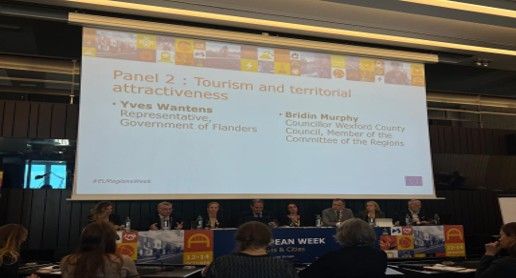
On October 14, 2026, five regional politicians gathered at the heart of Brussels to discuss the project launched at the millenary of William the Conqueror's birth. Fittingly titled “Millenium - 2027”, the initiative is led by the region of Normandy and includes eight European countries that trace their origins to the Norman ancestry.
The project’s self-professed aim is to “rediscover a shared (European) history, to strengthen European cooperation and to promote Normandy" and the other participating regions to tourists. In the spirit of transnational cooperation under the auspices of French patronage, François Priollaud, panellist and Vice-President of the Normandie Region, exclaims: “Conquest was yesterday; reconquering our ties is tomorrow!”
Against the background of the European Year of the Normans, the project promises to organise more than 1,500 initiatives: from textile creation, artistic journeys, Viking boat gatherings, to conferences, to a BBC/CBS series about William the Conqueror.
Reconquering historical ties between disparate territories across France, Italy, Scandinavia, and the British Isles means building networks in the present. While the material benefits of increased tourism are stressed by all speakers, they remain receptive to the risks that possible overtourism may pose.
We asked Mr Priollaud about plans to enlist European influencers to promote the participating regions and their Norman heritage. He endorses the project’s aim to promote the regions, arguing that historical tourism could ease summer overcrowding. Norman tourism, according to Priollaud, will be sustainable and sustained.
The project’s promise of a “new-old“ transnational identity can help address the revived nationalism and a retreat of countries to national history, says Audun Lysbakken, Director of West Norway Office. But the ambition to forge a shared European identity through history raises a fundamental question: Should Europe look to its past to build a common future?
Leaving the historians’ scepticism of a politicised history aside, another question begs an answer: How sustainable is this historical identity, given the demographic differences between today’s Europe (even Normandy!) and its 11th-century precursor? 23.3% of people in France have a foreign background; 20% of Irish residents were born abroad. The figures look similar across Scandinavia: In Sweden, 27.7%, and in Norway and Denmark 21.7% and 16.8% of the population respectively cannot trace their lineage back to Norman ancestry.
In all nine participating countries, substantial parts of the population are excluded from a transnational identity grounded in national history.
Faced with the existential question of who can be European, and who decides, it seems wiser to return to the material premise of the project.
Bridín Murphy, the Councillor on the Irish Wexford County Council, draws our focus to the economic benefits the project promises to smaller regions, like her home in south-eastern Ireland. “369,000 French tourists come to Ireland every year,” she says, “and over 50% of them travel to Wexford, to visit the Norman Way.” Where Priollaud sees collective identity, and Lysbakken the opportunity of an anti-national identification, Murphy’s vision is more practical: sustained tourism into marginal regions, revenue for local business and employment opportunities.
This does not have to be a contradiction in terms. European cooperation has always been economic; indeed, it is the material benefits the Millenium Project promises to its participating regions that may ensure cooperation lasts beyond 2027, maybe even another thousand years.
By Emma Tenzler and Nora Bahij