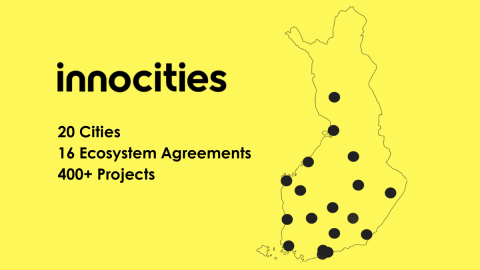
Europe’s competitiveness increasingly depends on cities’ ability to mobilise local innovation ecosystems: businesses, research institutions and public actors. 16 city regions in Finland have implemented sustainable urban development through a new multi-level governance model where cities and the state work in long-term partnerships through ecosystem agreements. The model builds on each city's distinct profile to foster regional innovation ecosystems and apply a strategic portfolio approach to EU funding, aligning national priorities with local strengths and boosting the impact of public investment. Recognised in the EU Agenda for Cities, the model has drawn great international interest.
- Cohesion | Governance and Public administration | Local and regional | National | Research and Innovation | Sustainable | Territorial | Urban
- Code: 12TK263726
- Jacques Delors building, JDE 61, Rue Belliard 99/101, Brussels, Belgium
Speaker
Practical information
- When
-
Mon 12/10/2026, 17:30 - 18:00 CET
- Where
- Jacques Delors building, JDE 61, Rue Belliard 99/101, Brussels, Belgium
- Type of partnership
- Partnership
- Format
- EURegionsTalk
- Theme
-
Strong regions, strong Europe
- Language
- English
Partners

Document
get-to-know-innocities_2
Reporting
Session summary
"Cities are at the forefront of change. They are a leading arena for addressing the defining issues of our time: sustainability, technological advancement, and well-being."
In the context of EUWRC 2026, Finland’s model of urban innovation seemed like a particularly timely and interesting practical way to marry cohesion and competitiveness. The model advances world-class innovation environments in Finnish cities. It does so through the cooperation a multitude of local, national and European actors, funded by a multi-level coalition consisting of the EDRF, the Finnish central government, research institutions and cities themselves.
"Finnish cities no longer compete for the same small spot in the sun. Instead, they have learned to pursue greater collective impact by embracing complementary roles. This is a key skill if Europe wants to remain globally competitive in emerging value networks: No European city can master them alone, so let’s do it together!"
The event registration reached the maximum capacity of 36 participants. Although a small number of registered participants did not attend, additional attendees filled the available seats, resulting in a full audience. The event was delivered successfully and encountered no technical issues. The event led to several follow-up enquiries regarding potential cooperation and networking opportunities.